
Is game meat healthy? Protein and fat compared with beef
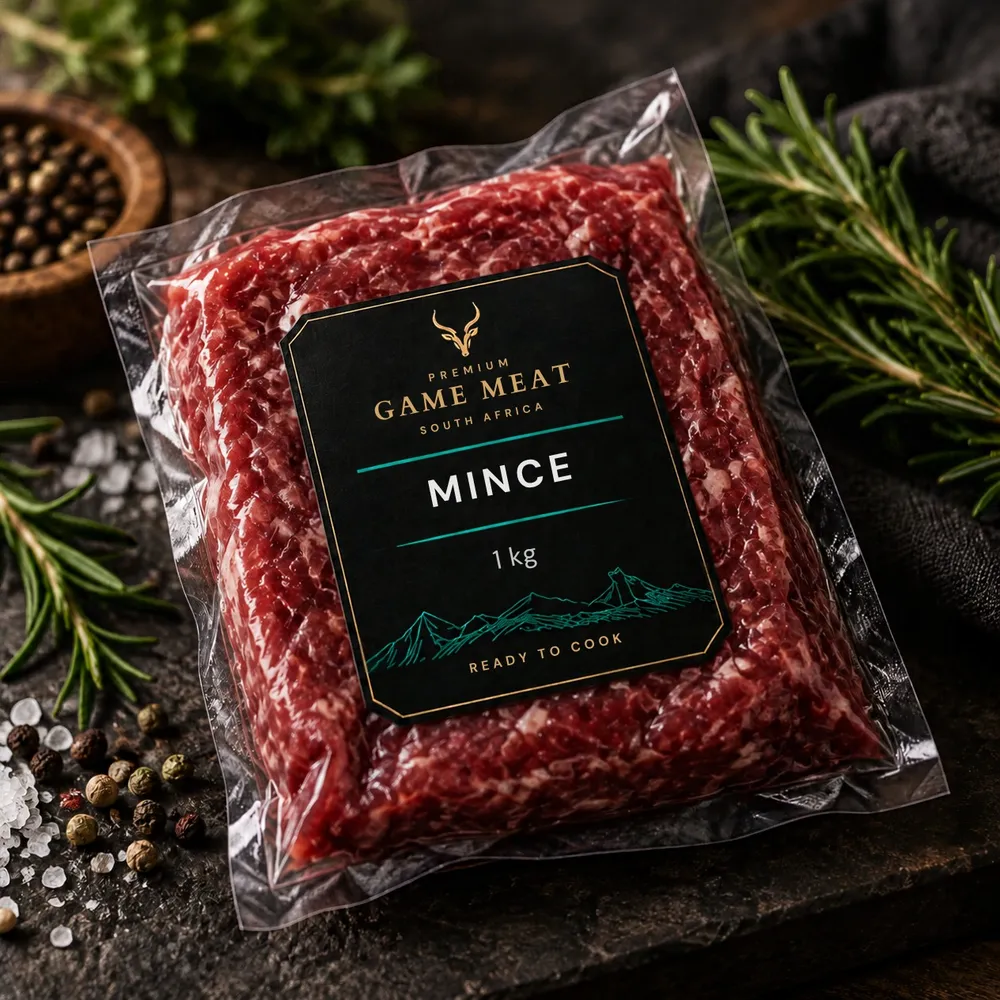
Is game meat healthy? It is a lean, high-protein red meat. Stellenbosch research puts kudu loin at about 1.6 g fat per 100 g and impala at about 2.2 g, with 21 to 22 g protein in both. USDA lists 95% lean raw beef mince at 5 g fat. This is general information, not medical advice.
Is game meat healthy?
For most people, game meat is a good choice if you want plenty of protein without much fat. Free-roaming antelope run and browse their whole lives and carry very little fat inside the muscle. That is why game keeps turning up in lists of lean protein and high protein meat.
"Healthy" depends on your whole diet and your own needs, so we will stick to what the research measured. Everything below is taken from published South African studies and the USDA food database, and every figure is per 100 g of raw meat.
Protein and fat per 100 g: game compared with beef
Here are the numbers, with the source of each. Protein and fat vary by animal, age, sex, muscle and where it was raised, so treat them as typical values, not guarantees.
- Kudu: about 21.7 g protein and 1.6 g fat (Stellenbosch University, Mostert, 2007).
- Impala: about 22.3 g protein and 2.2 g fat (same study).
- Springbok loin: 18.8 to 21.2 g protein depending on production region, and 1.3 to 3.5 g fat (Hoffman, Kroucamp and Manley, 2007).
- Ground ostrich, raw: 20.2 g protein, 8.7 g fat and 165 kcal (USDA FoodData Central).
- Beef mince, 95% lean, raw: 21.4 g protein, 5.0 g fat and 137 kcal (USDA FoodData Central).
Two things stand out. First, the protein is much the same across all of them, in the region of 20 to 22 g. A later Stellenbosch review of fallow deer put indigenous African antelope at roughly 19 to 26 g per 100 g. Second, the fat is where antelope pull ahead. Kudu, impala and springbok loin all sit at or below about 3.5 g, which is under the 5 g of a 95% lean beef mince.
Be careful with comparisons. The antelope figures are for the loin muscle, and the USDA entries are for mince, which includes some fat trim. Mince will always carry more fat than a lean steak cut from the same animal. Compare like with like when you look at labels.
Why the numbers vary from animal to animal
Game is wild, so it is not as uniform as farmed meat. In the springbok study, females averaged 3.13 g of intramuscular fat per 100 g and males averaged 1.35 g. That is more than double, in the same species and the same muscle. The kudu and impala research also found that females carried more fat than males, and that kudu had the lowest fat of the species tested.
The practical lesson is that any single figure is an average. Two packs of game mince from different animals can differ a little in fat, and the same goes for any meat. What stays consistent is the pattern: antelope are lean animals, and their meat is a good source of protein.
Ostrich mince protein per 100g and calories
Ostrich is a bird, not an antelope, but people often ask about it alongside game. Raw ground ostrich in the USDA database has 20.2 g protein per 100 g, 8.7 g fat and 165 kcal. The same database lists 95% lean beef mince at 21.4 g protein and 137 kcal, so the two are close on protein, while ostrich mince is the richer of the two in fat in these entries. Cooking changes the numbers, because water is lost and the nutrients become more concentrated.
Ostrich also matters for iron. The USDA lists 2.9 mg of iron per 100 g of raw ground ostrich against 2.4 mg for the 95% lean beef mince. If you want to know whether it counts as game, read is ostrich game meat.
What about iron and other minerals?
Red meat is a useful source of iron, and game is no exception. In the Stellenbosch fallow deer study, the authors point out that iron is one of the minerals of most interest for human diets, and that the iron in the deer meat was higher than figures published for beef and sheep. The USDA comparison above shows ostrich slightly ahead of lean beef too. We do not have a verified iron figure for each antelope species, so we will not guess.
Cooking lean game so it stays enjoyable
Lean meat is only healthy if you want to eat it. Overcooked game is dry and tough, and people give up on it. A few habits make a big difference:
- Cook tender cuts such as steaks and mince briefly and gently.
- Cook hard-working cuts such as shoulder, neck and shank slowly in liquid.
- Add a small amount of fat, such as olive oil or a little bacon, to a long cook instead of leaving it out.
- Rest steaks before you cut them.
Our guides on game mince recipes and how to cook kudu stew show how to do this in practice.
Easy ways to eat more lean protein
You do not need to overhaul your menu. Swapping game mince for beef mince in a bolognese, chilli or cottage pie is the simplest change, and the recipe stays the same. A stir fry made with thin strips of game and plenty of vegetables is another quick one. For weekends, a slow stew of game shoulder gives you a filling meal with very little fuss, and it keeps well in the fridge for lunches.
A careful note
This article is general information and not medical advice. If you have a medical condition, are pregnant, or follow a specific eating plan for your health, speak to a registered dietitian or your doctor about how much red meat suits you. We do not make claims about how game meat affects any health condition.
Where to start with game meat
If you want to try game, the simplest first step is mince. Our free-roaming South African game is cut to order by hand, vacuum sealed and delivered in cold boxes at 0-5°C. The Performance Box is 5 kg and holds 2 x 1 kg Ostrich Mince, Game Mince, Stir Fry and Goulash, so you can compare cuts in one order. You can also order Game Mince on its own.
Questions people ask
Is game meat healthy for you?
Game meat is a lean, high-protein red meat. Research on South African antelope shows about 21 to 22 g protein and under about 3.5 g fat per 100 g in the loin of kudu, impala and springbok. For specific health needs, speak to a dietitian.
Is game meat lean protein?
Yes. Kudu loin has about 1.6 g fat per 100 g and impala about 2.2 g, while still providing about 21 to 22 g protein. USDA lists 95% lean raw beef mince at 5 g fat per 100 g.
How much protein is in ostrich mince per 100g?
The USDA lists raw ground ostrich at 20.2 g protein per 100 g. It also lists 8.7 g fat and 165 kcal for the same amount.
How many calories are in ostrich mince?
Raw ground ostrich is listed at 165 kcal per 100 g in the USDA FoodData Central database. For comparison, 95% lean raw beef mince is listed at 137 kcal.
Sources
- Mostert, A.C. (2007). Meat quality of kudu and impala. MScAgric thesis, Stellenbosch University
- Hoffman, Kroucamp and Manley (2007). Meat quality characteristics of springbok. 2: Chemical composition. Meat Science 76(4)
- USDA FoodData Central: Ostrich, ground, raw (174481) and Beef, ground, 95% lean, raw (171790)
- Chemical composition of wild fallow deer meat from South Africa. Foods 2020, 9(5), 598