
Is Ostrich Game Meat? What It Is, How It Tastes and How It Compares
Is ostrich game meat? Strictly no. Ostrich is a flightless bird farmed in South Africa, mainly in the Klein Karoo around Oudtshoorn, not a wild-shot animal. But its meat is dark red and lean like game, so butcheries and recipes usually group it with game. It is not venison, which traditionally means deer meat.
Walk into a South African butchery and the ostrich sits next to the kudu, springbok and impala. Ask whether it is game and you get a shrug, because the honest answer is that it is and it is not. This guide sorts out what ostrich actually is, what it tastes like, and how it compares with antelope and beef.
So, is ostrich game meat?
By the strict definition, no. Game means wild animals hunted or culled in the veld. Most ostrich meat in South Africa comes from birds raised on farms, and the industry is centred on the Klein Karoo. Oudtshoorn is known as the ostrich capital of the world, and the Western Cape government says the industry contributes greatly to the local economy of the Klein Karoo.
In practice, though, ostrich is treated as game. It is a lean red meat with a clean, slightly sweet flavour, it is cooked like antelope, and shops stock it in the same section. Think of it as farmed game: it behaves like game in the kitchen even though it is not wild.
Is ostrich venison?
No. Venison traditionally means the meat of deer, and in South Africa people often use the word loosely for antelope such as kudu or springbok. Ostrich is a bird, so it falls outside both uses. Our guide on what venison is covers the term in more detail.
Is ostrich red meat?
Yes, in every way that matters in the kitchen. Ostrich is a bird, but its meat is dark red, the colour that comes from myoglobin, the iron-carrying protein in muscle. A food science review from Thermo Fisher Scientific describes ostrich as having a beef-like pH and the red appearance associated with high myoglobin, while still carrying the low fat and low cholesterol usually linked to white meat. That is why it is hard to file, and why it behaves like lean beef in the pan rather than like chicken.
What does ostrich meat taste like?
Mild. Most people describe it as close to lean beef, with a little sweetness and none of the strong gamey edge you can get from older antelope or from the cuts nearest the bone. It is not like chicken, despite being a bird. The colour and the texture sit much closer to a good fillet of beef.
Because it is so lean, it does not have a lot of its own fat to carry flavour, so it benefits from good seasoning, a hot pan and a sauce or marinade. If you can handle beef, you will find ostrich easy.
A useful rule of thumb: swap ostrich into any recipe you would make with lean beef or antelope, such as bolognese, stir fry, koftas or a quick pan-fried steak, and keep the cooking time short. The result is rarely a surprise, which is what makes it a good first step into game for people who are unsure.
Ostrich vs beef vs antelope: the numbers
The figures below come from USDA FoodData Central, per 100 g raw, and are for whole-muscle cuts. Antelope and deer entries are shown for context.
- Ostrich, fan fillet: about 117 kcal, 21.8 g protein, 2.65 g fat, 73 mg cholesterol, 4.38 mg iron.
- Antelope: about 114 kcal, 22.4 g protein, 2.03 g fat, 95 mg cholesterol, 3.19 mg iron.
- Deer: about 120 kcal, 23 g protein, 2.42 g fat, 85 mg cholesterol, 3.4 mg iron.
So ostrich and antelope are almost identical on calories, protein and fat, and ostrich comes out ahead on iron in this data. Ostrich is not meaningfully lower in cholesterol than the game entries, so do not expect it to be a cholesterol-free swap.
Against beef, the picture is leaner. The Thermo Fisher review lists fat at 1.6 percent for ostrich against 4.5 percent for beef, and 2.8 g of fat per 100 g of cooked lean meat for ostrich against 9.3 g for a beef composite. Ground ostrich is a different product from a fillet, though. USDA lists raw ground ostrich at 165 kcal and 8.7 g of fat per 100 g, so the fat content of mince depends on the cuts that go into it.
How to cook ostrich
Treat it like lean game, not like a fatty beef steak. These rules cover most of what goes wrong:
- Cook it hot and fast. A very hot pan or grill and a short cooking time beat a long, gentle cook for steaks and strips.
- Do not overcook. Lean meat has no fat to protect it, so it turns dry and chewy quickly.
- Rest whole cuts for a few minutes before slicing, and slice across the grain.
- Marinate or add oil. A simple marinade with oil, garlic and herbs gives lean cuts the moisture they lack.
- Slow-cook the tough cuts. Neck and shank cuts suit stewing in the same way as antelope.
For safety, the CDC lists ground meats at 71°C and all poultry, including ground poultry, at 74°C. USDA's database files ostrich under poultry products, and ratite meat falls in a grey area between the two categories. If you are cooking mince, patties or meatballs, the cautious choice is 74°C measured with a food thermometer. The CDC notes that colour is not a reliable guide. For mince ideas, see our ostrich mince recipes.
Where ostrich fits in a game meat shop
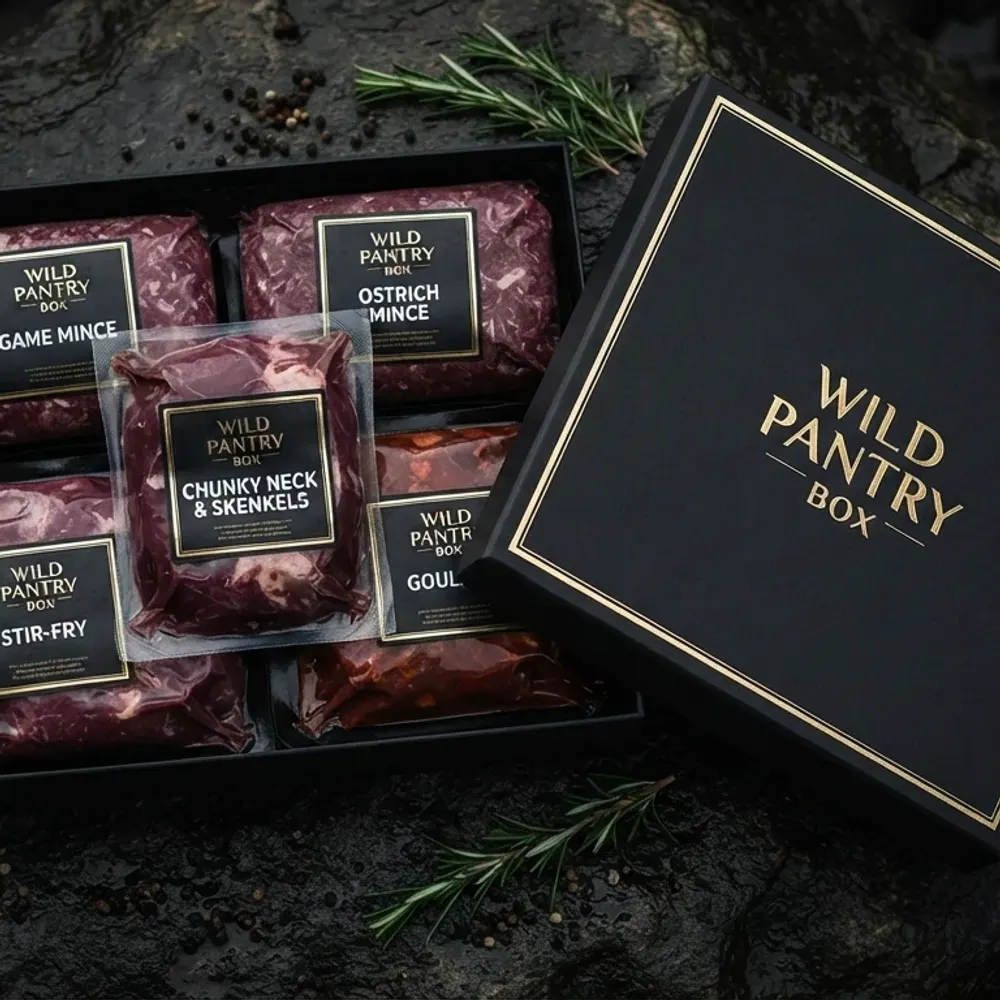
Ostrich gives you a mild, lean red meat that sits comfortably beside antelope in a box. Our Performance Box holds 2 x 1 kg ostrich mince with game mince, stir fry and goulash, and the Wild Pantry Box holds ostrich mince with game mince, goulash, stir fry and neck and skenkels. All of it is cut to order by hand, vacuum sealed and shipped in sealed cold boxes held at 0-5°C. For more on the nutritional side of game, read is game meat healthy.
Questions people ask
Is ostrich venison?
No. Venison traditionally means deer meat, and in South Africa it is often used loosely for antelope. Ostrich is a farmed bird, so it is neither.
Is ostrich red meat?
Yes. Although it is a bird, its meat is dark red because of its high myoglobin content, and its pH is similar to beef. It is lean like white meat but behaves like red meat in the kitchen.
What does ostrich meat taste like?
Mild and close to lean beef, with a slight sweetness and little gamey flavour. It is not like chicken. Because it is lean, it needs a hot pan, good seasoning and care not to overcook.
Is ostrich healthier than beef?
It is leaner. A Thermo Fisher review lists 2.8 g of fat per 100 g of cooked lean ostrich against 9.3 g for beef. Cholesterol is similar to antelope and deer in USDA data, so the main advantage is lower fat.
Sources
- USDA FoodData Central: Ostrich, fan, raw (FDC ID 174483)
- USDA FoodData Central: Game meat, antelope, raw (FDC ID 175292)
- USDA FoodData Central: Game meat, deer, raw (FDC ID 173855)
- USDA FoodData Central: Ostrich, ground, raw (FDC ID 174481)
- Thermo Fisher Scientific: Don't Bury Your Head, Ostrich Meat
- Western Cape Government: MEC Ivan Meyer on the Western Cape ostrich industry
- Wikipedia: Oudtshoorn
- CDC: Prevent food poisoning, safe minimum internal temperatures